“Am I too old for implants?” No. Here’s what actually matters
It is the question we hear most from patients over 65, and the research answer has been consistent for years: age by itself does not disqualify anyone. Studies of implant patients in their 70s and 80s show integration and survival rates comparable to patients decades younger. What the evaluation actually looks at:
- Bone volume. Years of missing teeth or denture wear shrink the jawbone, because bone that isn’t stimulated by tooth roots slowly resorbs. A 3D scan shows exactly what you have. Grafting, shorter implants, or 2-implant snap-in dentures solve most “not enough bone” cases.
- Healed extraction sites. If a tooth still needs to come out, the extraction is done first and the site is given time to heal, typically a few months, before the implant is placed. Placing an implant into a fresh, un-healed socket in a senior jaw trades predictability for a headline. We don’t make that trade.
- Medical conditions. Well-controlled diabetes, blood thinners, and most osteoporosis medications are all workable with coordination with your physician. Patients on long-term bisphosphonates get an extra review of the medication history before surgery. Uncontrolled conditions get stabilized first, then we proceed.
- Gum health. Active gum disease gets treated before implants go in, because the same bacteria that loosen teeth can undermine an implant.
In other words: a 78-year-old with a healed ridge, healthy gums, and managed blood pressure is a better implant candidate than a 45-year-old smoker with untreated periodontitis. The scan and the health history make the call, not the birth year.
Why seniors often benefit MORE than younger patients
- Nutrition. Full-denture wearers chew at a fraction of natural efficiency, roughly a fifth by most estimates, and quietly stop eating the foods that are hardest to chew: proteins, nuts, raw vegetables. Exactly the foods older adults need most. Implants restore the diet, not just the smile.
- Bone preservation. Implants stimulate the jaw the way natural roots do, slowing the bone loss and facial-collapse look that long-term denture wearers know well. The earlier that stimulation returns, the more bone you keep for the rest of your life.
- No adhesive, no slipping, no covered palate. An upper denture covers the roof of the mouth, which mutes taste and temperature. Implant-supported teeth leave the palate open. Food tastes like food again.
- Confidence. Patients tell us the real change isn’t chewing, it’s laughing without a hand over the mouth and ordering the steak without checking the menu for soft options.
The honest timeline: why good implant work is never same-day
You have probably seen ads promising a full set of teeth in a single visit. Here is the biology those ads skip: an implant succeeds because bone grows onto its surface and locks it in place, a process called osseointegration that takes roughly 2–4 months in the lower jaw and often longer in the upper. And if a failing tooth has to come out first, that socket needs its own healing time before the implant is placed. Rushing either step, especially in a jaw that has already lost bone, is how implants fail.
A realistic sequence for a senior patient looks like this:
| Stage | What happens | Typical time |
|---|---|---|
| Consultation & 3D scan | Digital scan and 3D X-ray map your bone; written plan and price | 1 visit |
| Extraction (if needed) | Failing tooth removed; site heals fully before anything is placed | ~2–3+ months healing |
| Bone graft (if needed) | Rebuilds volume where bone has resorbed | 3–6 months healing |
| Implant placement | Titanium post placed in healed bone; most patients back to routine in 2–3 days | 1 visit |
| Osseointegration | Bone fuses to the implant | 2–4+ months |
| Final teeth | Crown, bridge, or snap-in denture attached | 1–2 visits |
Start to finish, that is often 4–9 months. It sounds slower than the billboard version because it is, and it is also why implants placed this way routinely last decades instead of years. You are never left without teeth in the meantime; a temporary keeps you smiling while things heal.
Dentures vs implants: the 10-year math
Dentures win the sticker-price comparison every time. Over a decade, the ledger looks different. A conventional denture is not a one-time purchase: the jawbone underneath it keeps shrinking, so the denture needs relines every few years to keep fitting, and full replacement roughly every 5–8 years, plus a steady trickle of adhesive. The ranges below are market observations for the Chicago suburbs, not this practice’s pricing; your written quote comes after your scan.
| Over ~10 years | Conventional denture (per arch) | Snap-in implant denture (per arch) |
|---|---|---|
| Upfront cost | $1,800–$4,000 | $6,000–$18,000 |
| Relines & adjustments | $300–$500 every 2–3 years | Occasional attachment inserts (minor) |
| Replacement | Usually 1–2 full replacements | Denture may be refreshed; implants stay |
| Adhesives | Ongoing monthly cost | None |
| Bone loss | Continues, accelerating fit problems | Slowed where implants stimulate bone |
| Chewing power | A fraction of natural | Close to natural |
By year ten, many denture wearers have spent well past their original price tag and still own a loose denture on a smaller ridge. The implant patient made one larger investment and kept the bone. For the full decision framework between the two, see our snap-in dentures vs implants guide.
What implants cost for seniors
| Treatment | Typical U.S. cost |
|---|---|
| Single implant (implant + abutment + crown) | $3,000–$5,000 |
| Snap-in denture (2–4 implants, per arch) | $6,000–$18,000 |
| Fixed full-arch (per arch) | $15,000–$30,000 |
Full pricing detail, including what drives a quote up or down, is in our full-mouth implant cost guide.
Does Medicare cover dental implants? The straight answer
Mostly no, with two footnotes worth knowing:
- Original Medicare (Parts A & B) does not cover routine dental work, and that includes implants, dentures, extractions for dental reasons, and cleanings. Medicare pays for dental care only in narrow cases where it is directly tied to a covered medical treatment, such as certain exams and extractions required before organ transplant, cardiac valve surgery, or head-and-neck cancer treatment. A standard “I want to replace my missing teeth” case does not qualify.
- Medicare Advantage (Part C) plans often add a dental benefit, but read the fine print: most cap the annual dental allowance at a level that offsets only part of one implant, and some exclude implants specifically while covering dentures. The benefit is real, it is just rarely the whole answer.
What that means practically: most seniors fund implants through a mix of any Advantage-plan allowance, remaining HSA dollars, and monthly financing. We check your specific plan before treatment and put the real out-of-pocket number in writing. Bring your card to the $99 new-patient exam and we’ll do the legwork.
Recovery for seniors: what the first weeks look like
- Days 1–3: Mild soreness and swelling, managed with over-the-counter medication for most patients. Soft foods. Most people are back to their normal routine in 2–3 days; implant placement is typically gentler than the extraction that preceded it.
- Weeks 1–2: Gums settle. Short follow-up visit to check healing. Blood-thinner and diabetes patients get specific instructions coordinated with the physician.
- Months 2–4: The quiet phase. Bone is fusing to the implant under the surface. You live life normally.
- After integration: Final crown, bridge, or snap-in attachment placed. From there, care is simply brushing, cleaning around the implant, and regular checkups. Age does not meaningfully extend any of these phases; healthy tissue heals on roughly the same schedule at 75 as at 55.
Already wear a denture? Two implants can end the wobble
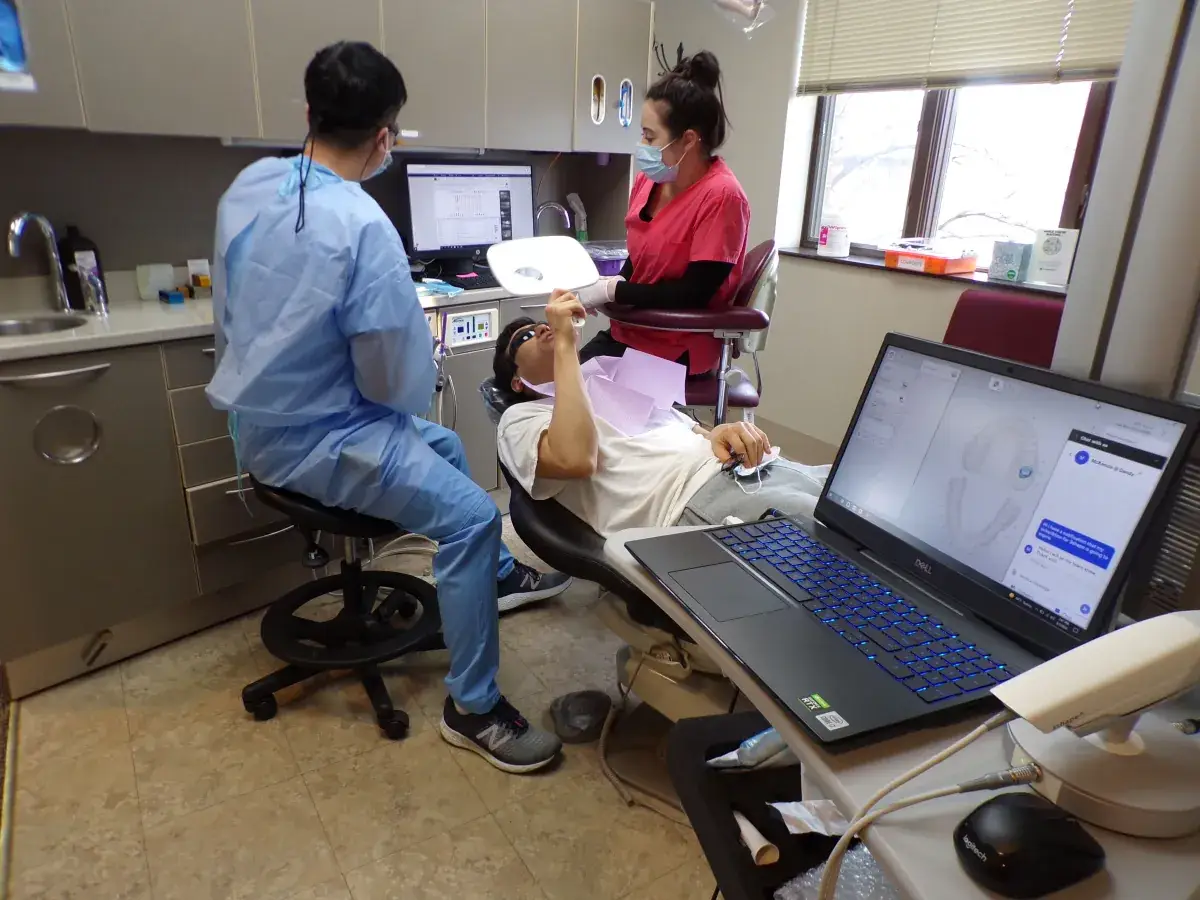
For many seniors the best first step is not replacing every tooth individually. If your lower denture rocks when you chew, as almost all lower dentures eventually do, two to four implants can anchor it with snap-on attachments. The denture clicks in solid in the morning, comes out for cleaning at night, and the adhesive goes in the trash. It is the most affordable way to get implant stability, and it is frequently the right call for patients who have worn dentures for years and lost bone doing it. We cover the options side by side in the snap-in dentures vs implants guide, or you can talk through your case at a dental implant consult.
FAQ
With normal healing and managed health conditions, yes. Studies show comparable success rates in older adults. The 3D scan and health history make the call, not age.
Not here, and we would push back on anyone offering it for a senior jaw. The extraction site heals first, then the implant is placed into solid bone. That order is a large part of why implants last decades.
Most patients are back to routines in 2–3 days. Full integration takes a few months regardless of age, and you are never left without teeth while it happens.
Get a second look with 3D imaging. Grafting, shorter implants, and 2-implant snap-in designs solve most bone-loss cases, including long-term denture wearers.
Original Medicare, no, outside of narrow medically-linked exceptions. Some Medicare Advantage plans contribute an annual dental allowance. We verify your exact plan before you commit to anything.
Patients in their 70s use their implants for 15–20+ years. Eating comfortably for two more decades is exactly what they’re for.
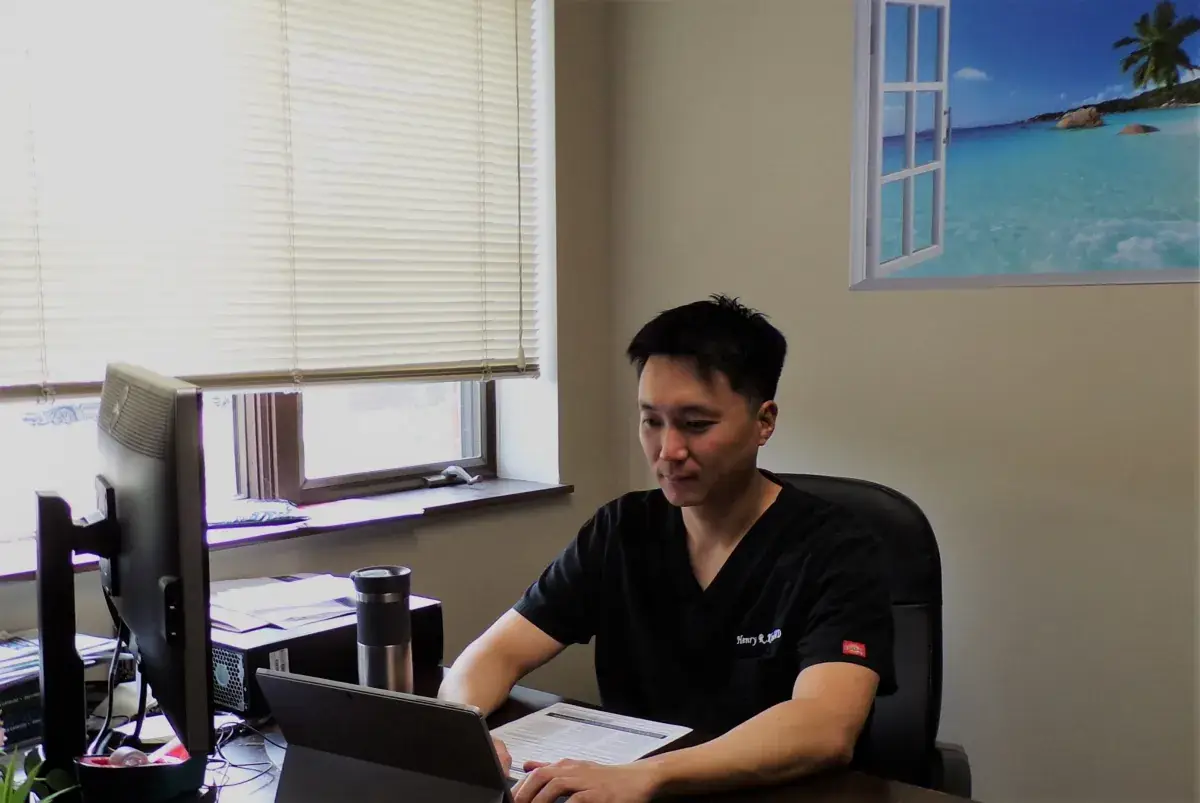
Meet Dr. Henry Kim, DMD, an implant and prosthetic-focused dentist who plans every case on a Trios digital scanner and 3D X-ray, with a 4.8-star rating from 126 patients here in Bloomingdale. Patients come to us from across DuPage County, including Roselle, Carol Stream, Bartlett, Addison, and Itasca. You can also read how our practice went from declining calls to #1 on Google.
Many of our senior patients already wear a denture that has loosened over the years; for them, an implant-supported denture is often the practical upgrade, and that guide compares it with regular dentures and fixed teeth in plain numbers. If it is the surgery itself that worries you, read what getting an implant really feels like, from the chair through the first week.
Start with a $99 new-patient exam & X-rays with Dr. Henry Kim, DMD in Bloomingdale. Every plan comes with a written price before anything starts.
Request Your Appointment